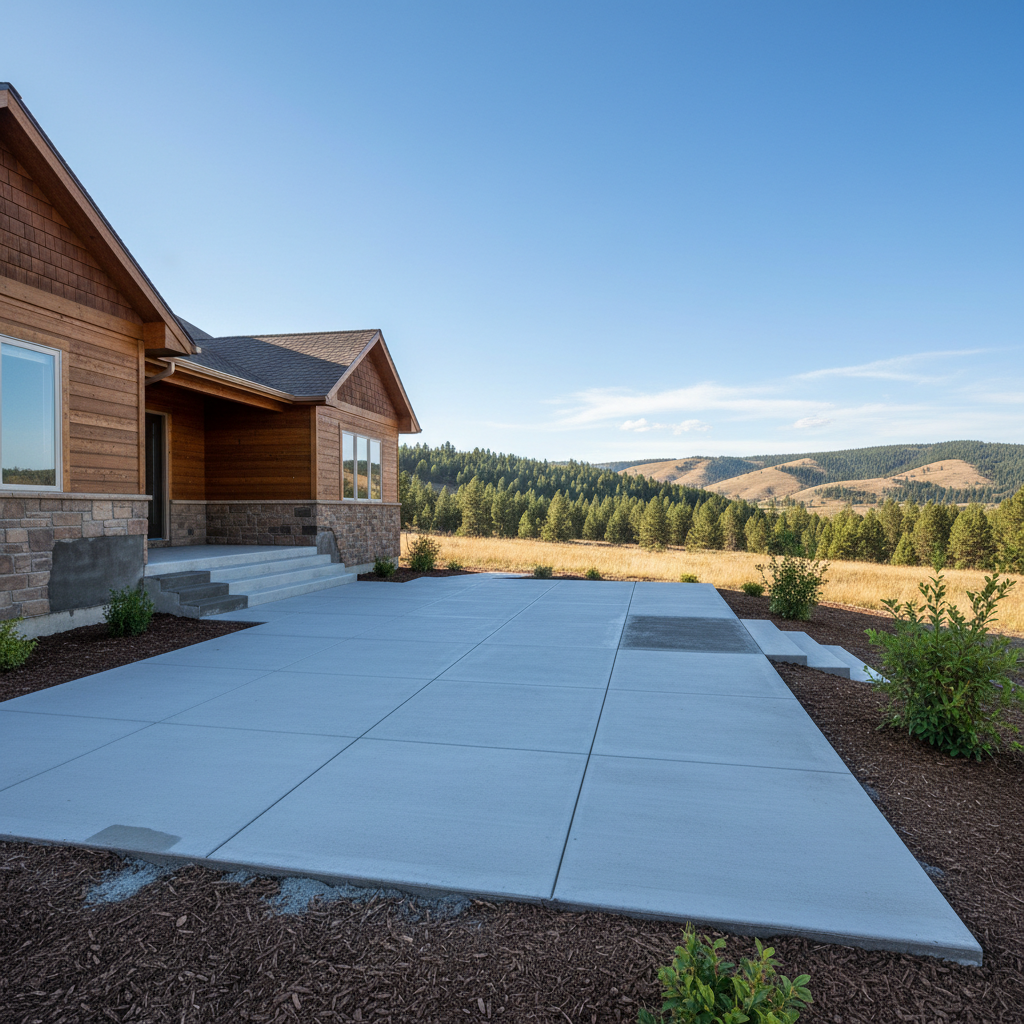
Let's talk about concrete repair. You might have cracks, or some spots that are not even, and you are probably wondering where to start. This is a common situation for homeowners here in Missoula, especially because of our freeze-thaw cycles and sometimes shifting soils. Planning a concrete repair project is not just about finding someone to pour concrete. It is about making sure the job gets done right and that it lasts for a long time.
Timing Your Missoula Concrete Repair Project
The first thing to think about is when is the best time to do this work. You cannot just pour concrete whenever you want, especially here in Montana. The best time for concrete repair in Missoula is usually from late spring through early fall. This is because moderate temperatures are important for the concrete to cure correctly as well as for the repair materials to stick well.
- Late Spring: This is a very good time. The ground has thawed out by then, and we are usually past the worst of the wet weather. Moderate temperatures and lower humidity make for good conditions for concrete repair.
- Summer: You can certainly do concrete repairs in the summer. However, you have to be smart about it. High temperatures can make the concrete dry too fast. This can cause cracking if it is not handled correctly. We are talking about careful timing as well as proper curing for your Missoula concrete repair.
- Early Fall: This is another good time for concrete repair in Missoula. Temperatures start to cool down, and there is usually less rain. This is good for concrete curing. Just do not wait too long. Those overnight lows can drop fast, and freezing temperatures are very bad for fresh concrete.
- Winter: Do not even think about exterior flatwork concrete repair during winter unless it is an emergency. If it is an emergency, you will need specialized, heated enclosures. Freezing temperatures risk improper curing. This can really mess up the concrete repair.
The main point is that the best time for concrete repair is when the ground is ready. It is also when the weather allows for good curing conditions for the concrete.
What to Expect During the Concrete Repair Process
So, you have your timeline figured out for your concrete repair. What actually happens when Top Line Concrete or another good company comes out to fix your concrete?
- Assessment & Quote: Our team will come out to your property. We will take a look at the damage. This damage could be cracks, pitting, spalling, or uneven slabs. We will figure out the best way to fix it. Top Line Concrete will then give you a clear estimate of the work that is needed.
- Preparation is Key: This is probably the most important part of any concrete repair. It is often missed by people who try to do it themselves. We will clean the damaged area thoroughly. Our team will get rid of all the dirt, debris, as well as loose concrete. For deeper concrete repairs, we might use a chisel or a grinder. This helps to create rough edges. These rough edges help the new concrete bond better. If it is a resurfacing job, we are talking about serious surface profiling. This makes sure the new material sticks well.
- Repair Application: We will use the correct materials depending on the problem. For cracks, it might be a flexible sealant. For spalling or pitting, it is usually a repair mortar or a resurfacer. If we are lifting sunken slabs, we might use high-density polyurethane foam.
- Finishing & Curing: Our team will smooth and level the surface once the repair material is applied. Then comes the curing process. This is not just letting it dry. It is a controlled process that helps the concrete get strong as well as durable. We will protect the repaired area from extreme temperatures as well as from rapid drying.
- Cleanup: A good concrete contractor cleans up their mess. You should not be left with debris or extra materials after the concrete repair is done.
How to Prepare Your Property for Concrete Repair
You can help make the concrete repair process easier for everyone involved. This also helps our team from Top Line Concrete.
- Clear the Area: Please move any vehicles, patio furniture, planters, or anything else off and around the concrete surface that needs repair. We need clear access to the work area.
- Mark Utilities: If you have any underground sprinkler lines, invisible dog fences, or other buried utilities near the concrete repair site, please make sure they are clearly marked. It is better to be safe than sorry.
- Manage Pets & Kids: Please keep pets and children away from the work area during the project. It is a construction zone. Safety is very important for everyone.
- Communicate: If you have specific concerns about drainage around your house, or maybe you are worried about a particular flower bed near the work, talk to us beforehand. For example, if you live in the Rattlesnake area of Missoula, you might have specific concerns about water runoff towards your foundation. Our team will want to address that during your concrete repair project.
Questions to Ask Before Signing a Concrete Repair Contract
You need to be confident in your choice before you commit to any concrete repair work. Here are some important questions to ask any concrete contractor in Missoula.
- Can I see your license and proof of insurance? This is very important. You want to make sure they are properly licensed. You also want to make sure they carry liability as well as workers' compensation insurance. This protects you if something goes wrong during the concrete repair.
- How much experience do you have with this type of repair? Concrete repair is not a one-size-fits-all job. Ask for examples of similar projects they have done in Missoula.
- Can you provide references? A good contractor will be happy to connect you with past clients. You should call those references. Ask if the project was on schedule. Also ask if they would hire the company again for concrete repair.
- What is the estimated timeline for the project? Get a clear idea of when they can start. Also ask how long they expect the job to take. Good contractors are often busy, but they should still give you a realistic timeframe for your concrete repair.
- What specific materials will you use, and why? There are different repair products for different concrete issues. They should be able to explain their choices for your concrete repair in Missoula.
- How do you handle permits? Many concrete projects in Missoula require permits. Make sure you know who is responsible for getting them.
- What kind of warranty or guarantee do you offer on your work? Get it in writing. You want to know that the concrete repair will last.
- What are your payment terms? Understand the deposit, progress payments, as well as the final payment schedule.
Asking these questions helps you find a professional who knows their trade. This will also help you find someone who will do right by your home. It is your property. So, take the time to do your homework. A solid concrete repair means a safer, better-looking home for many years to come in Missoula.