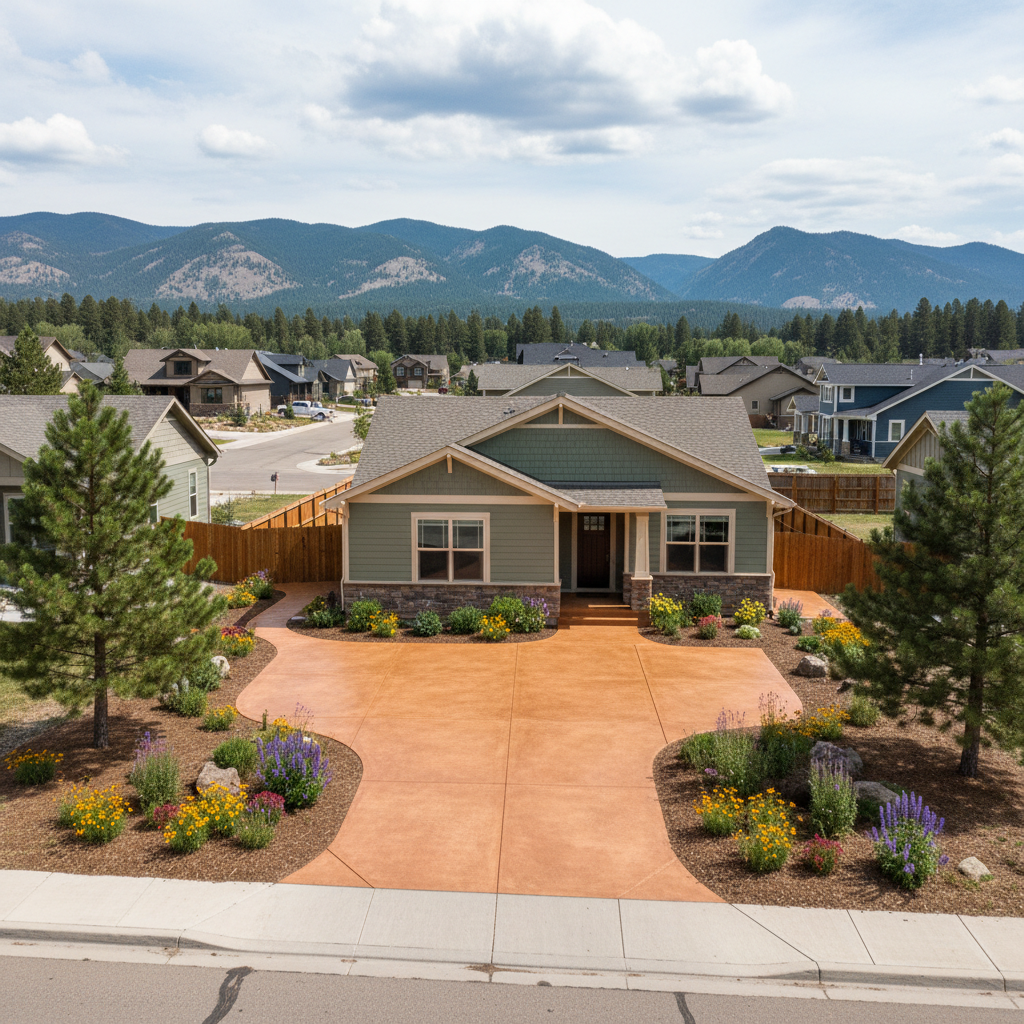
So, you've got a concrete slab – maybe it's a patio, a basement floor, or even your garage – and you're just plain tired of that drab, gray look. You've probably flipped through magazines or scrolled online, seen those gorgeous stained concrete floors, and thought, "Hey, I want that!" It's a fantastic way to give a space some real character and warmth, and honestly, we do a ton of it here at Top Line Concrete. But let me tell you, it's not just about slapping on some color and calling it a day.
Why Staining is Such a Hit Here in Missoula
Stained concrete brings a lot to the table, which is why it's become so popular in Missoula homes and businesses. For starters, it's incredibly tough. Once we properly seal it, it can really take a beating – pretty important if you've got kids, pets, or just a super busy household. It also doesn't need much upkeep compared to other flooring options. A quick sweep and a mop usually do the trick. Plus, it's a really smart, budget-friendly way to get that high-end look without spending a fortune on tile or hardwood, especially if you're working with an existing slab. That's a big win, right?
We see a lot of folks, especially in neighborhoods like the Rattlesnake or Grant Creek, who are looking to update their older, sometimes unfinished, basement floors. Or maybe they've just built a new place in the Orchard Homes area and want something truly unique for their main living space or a patio that really pops. Staining fits the bill perfectly because it works with what's already there, turning it into something completely fresh.
Understanding Missoula's Concrete & Conditions
Here’s where knowing the local scene really pays off. Not all concrete is the same, and Missoula’s specific conditions can definitely impact how a stain turns out. For instance, how old your existing concrete slab is and what kind of shape it's in are huge factors. If you’ve got an older slab that’s seen its share of spills, oil, or old coatings, it’s going to need a lot more prep work than a brand-new pour. Any leftover chemicals or sealers on the surface can stop the stain from soaking in evenly, which leads to blotchy or inconsistent results. We've seen plenty of DIY attempts go sideways because people just don't realize how crucial the prep is.
Our local climate is another thing to think about. We get those hot summers and cold, snowy winters. If you're staining an outside patio, you absolutely need to make sure we use the right kind of stain and sealer to handle those big temperature swings and all that moisture. An exterior stain has to be UV resistant so it doesn't fade fast in our intense summer sun, and the sealer needs to be tough enough for freeze-thaw cycles without peeling off. The last thing anyone wants is their beautiful patio stain flaking away after just one winter.
Acid Stains vs. Water-Based Stains: What's the Deal?
When we get down to the actual staining process, you generally have two main types to choose from: acid-based stains and water-based stains.
- Acid Stains: These actually react chemically with the free lime in the concrete. The result? A translucent, mottled, one-of-a-kind look. Think of it like a natural patina developing. The colors usually lean towards earthy tones – browns, greens, blues – and the final outcome is always a bit of a surprise, which, frankly, is part of its charm. It soaks in deep, making it very durable. We often suggest these for a more organic, natural stone feel, especially in commercial spots or those rustic-style homes around Bonner.
- Water-Based Stains: These are more like paints, but they still penetrate the surface. You get a much wider palette of colors with these, including really vibrant hues, and you have more control over the final color and how opaque it is. They don't react chemically, so you won't get that same mottled effect as acid stains, but we can apply them in layers to build up depth. These are fantastic if you need a very specific color match or a more uniform finish. We use them a lot for interior residential projects where clients have a very particular aesthetic in mind.
The choice between the two really depends on the look you're after and, of course, the condition of your concrete. Sometimes, we even mix techniques to get a truly custom finish.
Why Proper Sealing is So Important
Once the staining is done, the single most critical step is sealing. This is what keeps your beautiful new floor or patio safe from wear, moisture, and UV damage. A good sealer will make the color pop, create a protective layer, and make cleaning a total breeze. For indoor floors, we often go with a clear epoxy or urethane sealer; it gives a glossy, super durable finish. For outside applications, we'll use an acrylic or penetrating sealer that offers excellent weather resistance and helps with slip protection.
Skipping or cutting corners on the sealer is just asking for trouble. It’s kind of like painting your house but forgetting the top coat – it just won't last, will it? We always make sure to put on multiple coats and use products specifically made for our climate and how the surface will be used.
Why Local Expertise Really Counts for Staining
Sure, you can grab concrete stain at the big box store. But getting a professional, long-lasting finish that truly makes your property shine takes more than just a brush and a bucket. It takes experience with all sorts of concrete, a good grasp of how different stains react, and knowing which sealers will stand up best to Missoula’s unique environmental challenges.
We’ve been working with concrete in this valley for years now. We know the common headaches with older slabs, the best products for our climate, and exactly how to get those stunning, durable results you’re hoping for. Don't risk ending up with a blotchy, peeling mess. If you're thinking about giving your concrete a facelift with stain, just give us a call at Top Line Concrete. We'd be happy to chat through your project and show you what's truly possible.