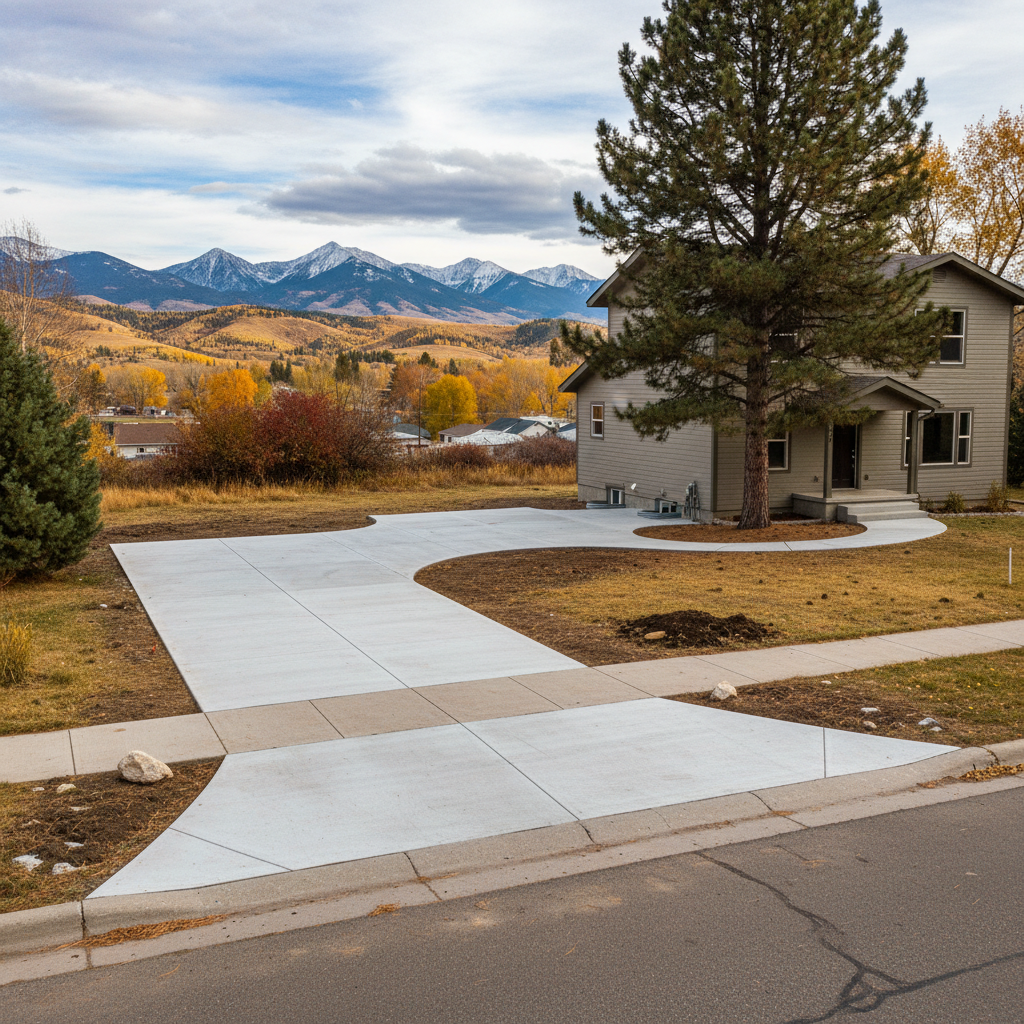
Alright, Missoula homeowners, we need to talk about concrete. You might be thinking about a new driveway, a new patio, or maybe a walkway up to your front door. That is a good investment for your property. But around here, you cannot just pour concrete any old time and expect it to last. Our unique Montana climate demands a bit more planning as well as care. As someone who has been working with concrete in this valley for years, I have seen what works. I have also seen what does not work.
When to Schedule Your Concrete Project in Missoula
Timing is important when it comes to pouring concrete in Missoula. The ideal temperature range for pouring concrete is generally between 50°F and 60°F. Temperatures from 50°F to 75°F are also considered good for a Concrete Project. This is because the concrete can cure properly in these temperatures. It will develop its full strength without drying too fast or too slow. Our short, warm summers as well as freezing winters mean we have a pretty specific window for a Concrete Project in Missoula.
- Spring (Late April to Early June): This can be a good time for a Concrete Project in Missoula. Temperatures are often in that ideal range. While we get some rain, it is usually not extreme. The average last frost in Missoula is around May 8th. You will want to keep an eye on the forecast. This helps to avoid pouring right before a cold snap or a heavy downpour.
- Summer (Mid-June to Mid-September): This is our busiest season for Concrete Projects. Missoula summers are typically warm and dry. July is our hottest month, with average highs around 85°F. You can pour concrete in hotter weather. However, you need to be careful. High temperatures can cause the concrete to set too quickly. This can lead to shrinkage cracks as well as reduced strength. We might need to schedule Concrete Projects for early mornings or evenings when it is cooler.
- Fall (Late September to Mid-October): This is another good window for a Concrete Project in Missoula. It is similar to spring conditions. The average first frost is around September 27th. You are trying to get the concrete poured as well as cured before the really cold weather hits.
- Winter (November to March): This is generally a no-go for pouring new concrete in Missoula. This is unless it is absolutely necessary and with significant precautions. Missoula sees freezing temperatures regularly from October into April. When temperatures drop below 40°F, the chemical reactions that strengthen concrete slow down a lot. Below freezing, water in the concrete can freeze as well as expand. This can cause cracks as well as significant damage. The Missoula Building Department actually has specific requirements for cold weather concrete placement. This includes maintaining temperatures above 32°F for a minimum of 5 consecutive days when it is 20°F and below. This often requires heated enclosures or blankets. You do not want to mess with that unless it is an emergency.
Weather Conditions That Affect the Concrete Project Work in Missoula
It is not just temperature. A few other things can impact your concrete installation in Missoula:
- Rain: Freshly poured concrete and rain do not mix. This is especially true in the first few hours. Even light rain can interfere with the setting process. We always keep an eye on the forecast. If rain is expected, we will need to cover the fresh concrete.
- Wind: High winds, especially on hot days, can speed up surface drying. This can lead to cracking. It is another factor we consider when planning as well as protecting a new concrete pour.
- Humidity: Low humidity, combined with high temperatures and wind, can also speed up drying as well as cause issues for your Concrete Project.
- Frost Depth: This is an important factor for foundations as well as footings. This is especially true in Missoula. While the state minimum footing depth is 24 inches, Missoula County requires a minimum frost depth of 36 inches below grade. This is because of our local climate conditions. Some areas in western mountain valleys can even approach 48 to 54 inches. This is important to prevent frost heave. Frost heave is where freezing water in the soil expands. This can lift as well as crack your concrete.
Protecting Your Concrete Investment in Missoula Year-Round
Once your concrete is in, the job is not over. Missoula's freeze-thaw cycles are hard on concrete. Water gets into the tiny pores. It then freezes, expands, and eventually causes pitting, scaling, as well as cracking. Here is how to protect your Concrete Project in Missoula:
- Sealing is Important: I cannot stress this enough for your Concrete Project. A quality penetrating concrete sealer is your best defense against our Montana winters. These sealers soak into the concrete. They create a barrier that repels water. They do this without changing the look or making it slippery. This significantly reduces water absorption. This is important to preventing freeze-thaw damage, spalling, pitting, as well as scaling. You will want to reapply it every few years. This depends on the product as well as the exposure.
- Proper Drainage: Make sure water drains away from your concrete surfaces. Puddles that sit and freeze will speed up damage. This is especially true for driveways and patios where snowmelt can accumulate.
- Avoid Harmful De-icers: Many de-icing salts can be very bad for concrete. Look for concrete-safe alternatives if you need to treat icy surfaces.
- Keep it Clean: Regular cleaning helps prevent dirt and grime from building up. This also prevents dirt from holding moisture against the concrete.
At Top Line Concrete, we always factor in Missoula's unique climate when we plan as well as execute a Concrete Project. We know what it takes to make concrete last here. This is true whether it is a new garage slab in the Rattlesnake neighborhood or a backyard patio in the Orchard Homes neighborhood. Do not cut corners on planning or protection for your Concrete Project. Your concrete will serve you well for years to come in Missoula.