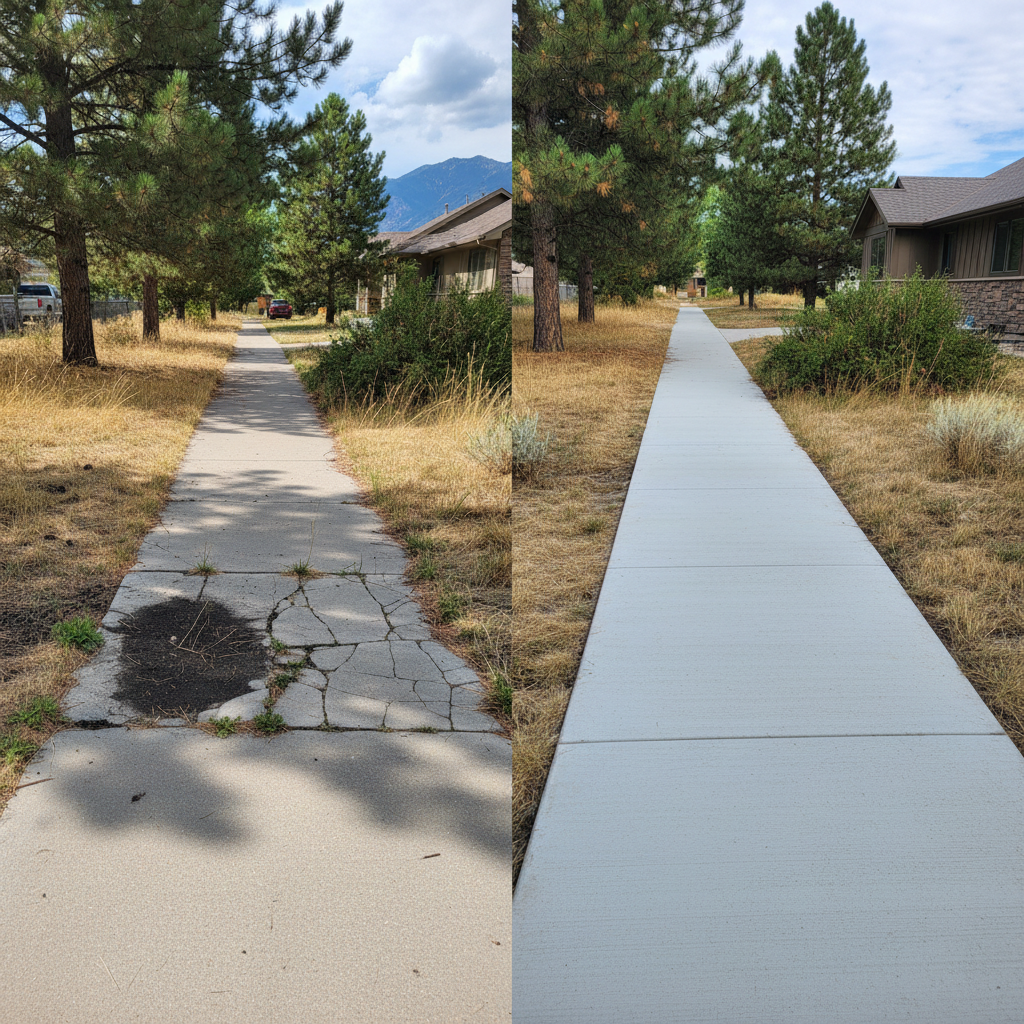
Alright, let's talk sidewalks. You need a new one, or maybe you're finally replacing that old, cracked-up path, and you're probably wondering what the best way to go is. For most folks around Missoula, it usually comes down to two main options: a good old-fashioned poured concrete sidewalk or going with concrete pavers. Both have their place, sure, but they're definitely not the same, especially when you factor in our Montana weather.
Poured Concrete: The Tried and True
When I say 'poured concrete,' you probably picture exactly what you see everywhere – a solid, continuous slab. It's been the go-to for a long, long time, and for good reason.
Cost
Generally speaking, poured concrete is often the more budget-friendly option right off the bat. You're paying for the materials (cement, aggregate, water), plus the crew's labor to form it up, pour it, and then finish it. There's just less individual piece handling compared to pavers, which can really keep those labor costs down. If you're looking to get a decent sidewalk without breaking the bank, this is usually your more economical choice.
Durability & Maintenance
A well-installed concrete sidewalk is tough, no doubt. It's one solid piece, so you won't find a bunch of joints for weeds to sprout through. It can handle heavy foot traffic, bikes, even light vehicles if it's thick enough and properly reinforced. The key word there is 'well-installed,' by the way. If you skimp on the base prep or the mix, you'll see cracks pop up sooner rather than later. Here in Missoula, with our freeze-thaw cycles, those cracks can expand fast. You'll want control joints cut into it; they help manage where it cracks naturally. Maintenance is pretty low – sweep it, maybe power wash it once in a while. If it does crack significantly, repair can be a patch job that might not match perfectly, or you're looking at tearing out and replacing entire sections.
Appearance
A basic gray concrete sidewalk is, well, basic gray. It's clean, functional, and doesn't really draw a lot of attention to itself. You can dress it up with broom finishes, exposed aggregate, or even some color, but it's still a monolithic look. It's a classic, understated appearance that fits most homes, especially in older neighborhoods like the University District.
Concrete Pavers: The Flexible Choice
Then you've got concrete pavers. These are individual, interlocking blocks that get laid over a carefully prepared base. Think of them kind of like a puzzle for your path.
Cost
Pavers almost always cost more upfront than poured concrete. The materials themselves can be pricier per square foot, and the labor to lay each paver, make sure it's all aligned just right, and compact the base is more intensive. It's a more detailed, time-consuming installation process, so you're definitely paying for that extra craftsmanship and the material cost.
Durability & Maintenance
This is where pavers really shine, especially in a climate like ours. Because they're individual units with sand in the joints, they have a natural flexibility. When the ground freezes and thaws, or shifts a little, the pavers can move slightly with it without cracking. A poured slab, being rigid, will often crack under that same stress. If a paver gets damaged, you can usually just lift it out and replace it. Same goes for utility access – need to get to a pipe under the sidewalk? Pull up the pavers, do your work, put them back. Try that with poured concrete! Maintenance involves sweeping, occasional joint sand replenishment, and maybe some weed control in those joints, though a good installation minimizes that.
Appearance
Pavers offer a huge range of aesthetic options. You can get them in different shapes, sizes, colors, and textures. You can create patterns, borders, and really customize the look to match your home's style. They can give a more upscale, European, or even rustic feel depending on your choice. It's a much more decorative option than standard poured concrete.
My Take: What's Best for Missoula?
Look, both options are solid. If you're on a tighter budget and just need a functional, durable path, a well-poured concrete sidewalk by a reputable contractor like Top Line Concrete is a fantastic choice. Just make absolutely sure they're doing proper base prep and cutting those control joints.
However, if your budget allows, and you're looking for something that offers superior long-term flexibility against our notorious Missoula freeze-thaw cycles, and you want that custom, high-end look, I'd lean towards pavers. The ability to repair individual sections or simply relay them if there's significant ground movement is a huge advantage here. You'll pay more upfront, but you might save yourself headaches and costly repairs down the road.
Ultimately, it comes down to your priorities: budget, aesthetics, and long-term maintenance preferences. Either way, make sure you're getting a professional installation. A bad install, whether it's concrete or pavers, will cause problems no matter how good the materials are.