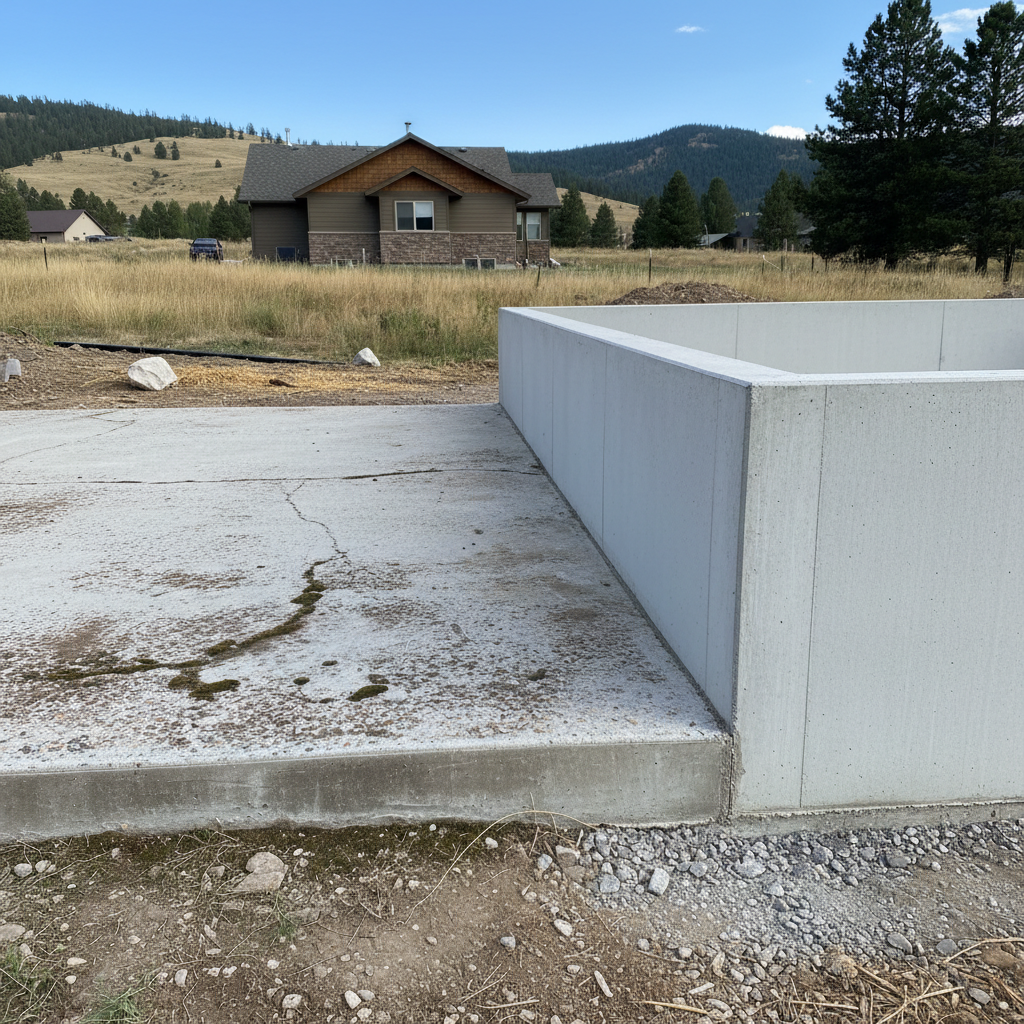
Building a new home or adding on? You've got a lot of choices to make, and one of the biggest, literally, is your foundation. For most folks in Missoula, it usually comes down to two main options: a concrete slab or a crawl space. People ask me all the time, "Which one's better?" The truth is, there's no single 'best' answer for everyone, but I can tell you what I've seen work well, and what doesn't, here in the valley.
Concrete Slab Foundations: The Basics
A slab foundation is pretty straightforward. It's a thick, reinforced concrete pad poured directly on the ground, serving as your home's floor. The edges are typically thicker, forming a footing that bears the weight of the exterior walls. Sometimes there's a perimeter footing with the slab poured inside.
Cost & Installation
Generally speaking, a concrete slab is the most economical foundation to pour. You're looking at less excavation than a crawl space, and fewer materials overall – no floor joists, no subfloor, no separate foundation walls. That can save you a good chunk of change upfront. Installation is usually quicker too, which means less labor cost. Here at Top Line Concrete, we can get a slab poured and finished efficiently, getting your project moving faster.
Durability & Maintenance
Slabs are incredibly durable. They're solid, resistant to pests like rodents and termites (since there's no open space underneath), and less prone to moisture issues from the ground if properly prepared with a vapor barrier. Maintenance is minimal; you're mostly concerned with keeping the surface in good shape. The big downside? If you have plumbing or electrical lines embedded in the slab and they need repair, it means breaking up concrete. That's a mess, and it's expensive.
Appearance & Comfort
Aesthetically, a slab is just your finished floor. You can stain it, polish it, or cover it with any flooring you like. Comfort-wise, slabs can sometimes feel colder underfoot, especially in our Missoula winters, unless you've got radiant heating installed. They also don't offer much in the way of sound dampening compared to a framed floor system.
Crawl Space Foundations: What to Know
A crawl space foundation involves concrete footings and walls that raise your home off the ground, leaving a shallow, accessible space underneath. This space is typically 18 inches to 3 feet high.
Cost & Installation
Crawl spaces are usually more expensive than slabs. You've got more excavation, more concrete for the walls, and then you need a full floor system – joists, subfloor, insulation. All those extra materials and labor add up. Installation takes longer too, as there are more steps involved in framing out the floor.
Durability & Maintenance
Crawl spaces are also very durable, but they come with their own set of maintenance considerations. They offer easy access to plumbing, electrical, and HVAC systems, which is a huge plus for repairs or future modifications. However, they can be prone to moisture issues if not properly vented and sealed. We see a lot of homes in the Rattlesnake area, for example, built on slopes where proper drainage around a crawl space is absolutely critical to prevent water intrusion. If moisture gets in, you're looking at potential mold, mildew, and even structural problems if wood members get wet. Pests can also be an issue if the crawl space isn't sealed off well.
Appearance & Comfort
With a crawl space, you get a traditional framed floor, which often feels warmer and softer underfoot. It also provides better sound insulation between floors. You can choose any flooring you want, just like with a slab. The main aesthetic difference is that your home sits higher off the ground, which some people prefer.
My Take: What Works Best in Missoula
For most homeowners in Missoula, especially given our climate and soil conditions, I lean towards a crawl space foundation. Here's why:
- Access for Repairs: Our extreme temperature swings mean pipes can burst, and our older homes often need electrical upgrades. Having easy access to utilities under the house is invaluable. Breaking up a slab for a plumbing leak is a nightmare you want to avoid.
- Moisture Management: While crawl spaces can get damp, proper encapsulation and ventilation can effectively manage moisture. It's often easier to fix a moisture issue in a crawl space than dealing with it directly under a slab. Plus, in areas with higher water tables, a crawl space allows for better drainage solutions.
- Comfort: A framed floor over a crawl space just feels better in winter. You can insulate it well, and it doesn't have that direct thermal connection to the cold ground.
- Flexibility: Need to run a new cable, add a new plumbing line, or change your HVAC ducting? A crawl space makes it a much simpler, less destructive job.
Now, if you're on a tight budget and don't anticipate many future modifications, or if you're building a garage or a small shed, a slab foundation is a perfectly good, cost-effective choice. And if you're set on radiant floor heating, a slab is often the best way to go. Just make sure your contractor, like us at Top Line Concrete, does a top-notch job with the vapor barrier and proper compaction underneath.
Ultimately, it comes down to your priorities, your budget, and the specifics of your building site. Talk to your builder, and if you have any questions about the concrete work itself, don't hesitate to give us a call. We're happy to walk you through the options and help you make the right choice for your Missoula home.