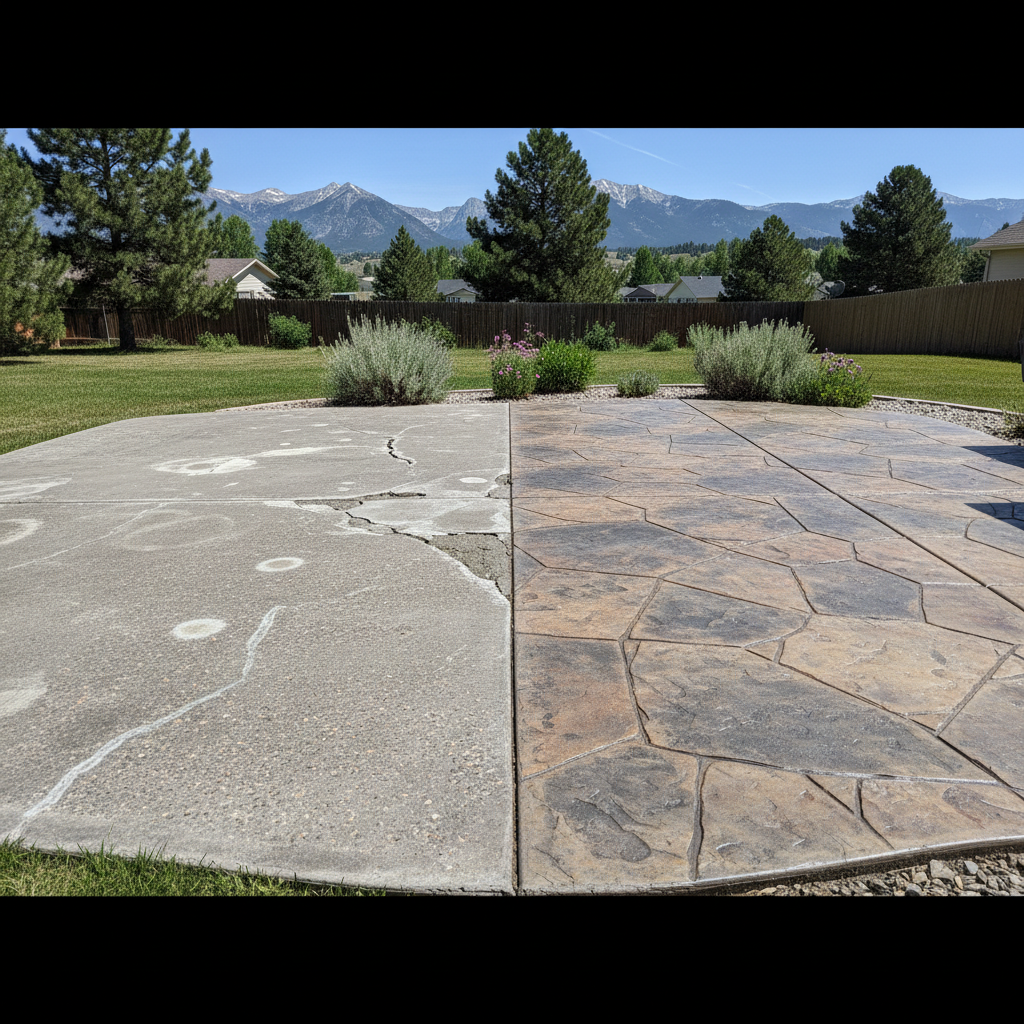
Thinking about giving your patio, walkway, or even an indoor floor a facelift with decorative concrete? Smart move. It's tough, looks great, and when it's done right, it really does add value. But as you start digging into it, you'll quickly discover there are a few different ways to get that decorative look. Today, I want to chat about two of the most popular choices: stamped concrete and stained concrete. I see a lot of both around Missoula, and while each has its place, they're definitely not the same thing.
Stamped Concrete: That Stone, Brick, or Wood Vibe
Stamped concrete is pretty much what it sounds like: we pour fresh concrete, and then, while it's still wet, we press large, flexible mats into it. These mats have patterns molded right into them. They can mimic all sorts of natural stuff – flagstone, brick, wood planks, even cobblestone. We also mix color into the concrete itself, or sometimes we apply color hardeners and release agents, to really nail that realistic, multi-tonal look. It's a pretty amazing transformation, honestly.
Pros of Stamped Concrete:
- Appearance: You can get incredibly realistic textures and patterns. If you're after the look of natural stone without the cost or the headache of maintaining individual pavers, this is your best bet.
- Durability: It's concrete, so it's inherently strong. A properly installed and sealed stamped concrete surface will stand up to heavy foot traffic, vehicles (if it's a driveway), and our Missoula winters quite well.
- Value: It definitely boosts curb appeal and can increase your home's value.
Cons of Stamped Concrete:
- Cost: This is generally the pricier option of the two. The labor involved in stamping, coloring, and sealing, plus the specialized tools, really adds up.
- Installation Complexity: It's a precise job that needs experienced hands. Timing is everything – if the concrete sets too fast or too slow, the patterns just won't come out right.
- Maintenance: While durable, it needs regular sealing (usually every 2-3 years) to protect the color and surface from wear and tear, especially with our freeze-thaw cycles here in the Rattlesnake Valley. If the sealant wears off, the color can fade and the surface becomes more susceptible to damage.
Stained Concrete: Color That Really Sinks In
Stained concrete is a different animal entirely. Instead of adding texture, we're adding color that actually penetrates the concrete surface. There are two main types: acid-based stains and water-based stains. Acid stains react chemically with the lime in the concrete, creating translucent, variegated effects that look a lot like natural stone or marble. Water-based stains, on the other hand, give you a wider range of colors and more consistent coverage, though they don't have quite the same reactive, mottled look.
Pros of Stained Concrete:
- Cost: Generally less expensive than stamped concrete, especially if you're staining an existing concrete slab that's in good shape.
- Durability: Because the color penetrates the surface, it won't chip, peel, or fade like a topical paint might. It's incredibly long-lasting, which is nice.
- Versatility: You can achieve a huge range of looks, from earthy tones to vibrant colors, and it works great indoors and out. It's fantastic for basements, garages, or even main living areas.
- Maintenance: Like stamped concrete, it needs sealing, but the color itself is very low maintenance once it's applied.
Cons of Stained Concrete:
- No Texture: This is the big one. Staining won't hide cracks or imperfections in the concrete, and it won't add any texture. If you want a textured surface, you'll need to look elsewhere or combine it with other techniques.
- Appearance Variability (Acid Stains): Acid stains are a bit unpredictable. The final color depends on the concrete's composition, so you get unique, organic looks, but it's harder to guarantee an exact shade. This can be a pro or a con, depending on what you're after, right?
- Surface Prep: For the stain to penetrate properly, the concrete needs to be super clean and free of sealers, glues, or grease. This can sometimes mean a good bit of grinding or stripping.
My Recommendation for Missoula Homeowners
So, which one should you choose? It really boils down to your priorities.
If you're looking for a dramatic, high-end aesthetic that mimics natural stone or brick for an outdoor patio, walkway, or even a pool deck, and you've got the budget for it, stamped concrete is probably your best bet. It offers that texture and visual interest that really makes a statement. Just be prepared for the sealing maintenance; it's crucial for protecting it against our harsh winters and the summer sun.
However, if you're on a tighter budget, or you're looking for a beautiful, durable, and unique finish for an interior floor, a garage, or an outdoor space where texture isn't the primary goal, then stained concrete is a fantastic option. It's incredibly durable, the color won't wear off, and it's a great way to revitalize an existing concrete slab. For instance, if you've got a concrete basement floor that's just begging for a makeover, staining it can transform it into something truly special without breaking the bank. It holds up exceptionally well to the wear and tear of family life.
Here at Top Line Concrete, we've done plenty of both. We've seen stamped patios weather years of snow and sun, and stained floors that look as good as the day they were put in. The key, no matter which you choose, is proper installation and consistent sealing. Don't skimp on those steps, or you'll regret it down the line. Give us a call if you want to talk through your specific project; we can show you samples and help you figure out what's going to work best for your home and your budget.